Introduction:
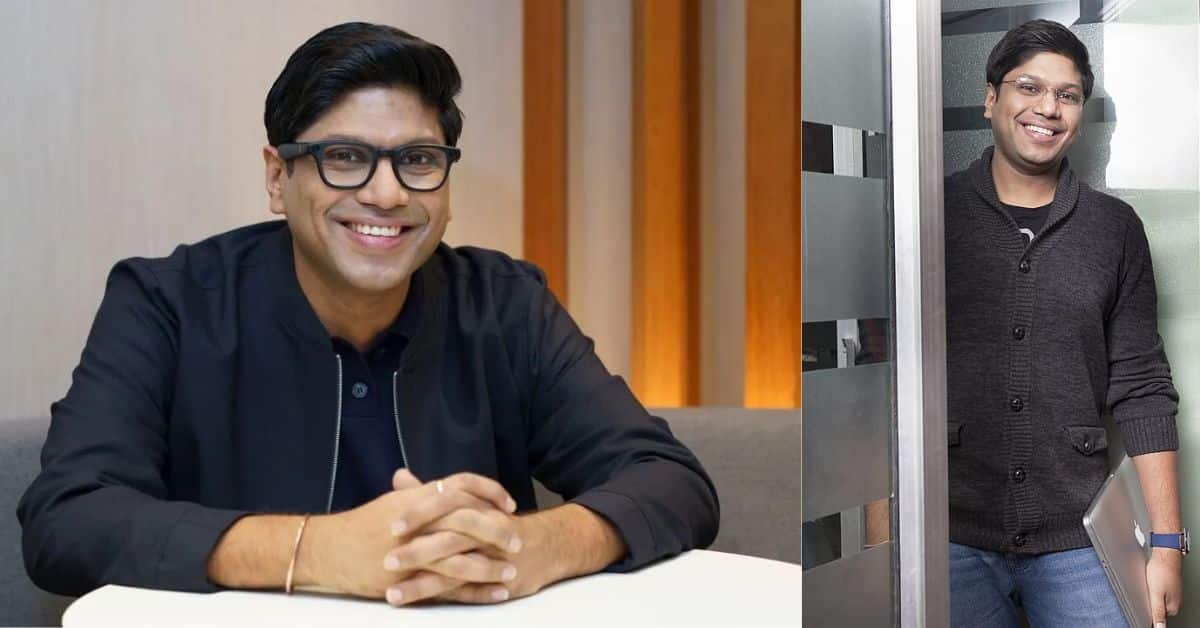
Imagine trying to revolutionize an entire industry that most people take for granted. Before 2010, buying a pair of prescription glasses in India meant dealing with inaccurate power readings, limited options, aggressive markups, and local opticians who took over a week to deliver. Enter Peyush Bansal, the disruptor who changed how an entire nation views vision correction.
As the co-founder and Lenskart CEO, Peyush reimagined eyewear from a dry medical necessity into an affordable, trendy lifestyle accessory. But his story isn’t just about glasses; it’s a masterclass in relentless execution, grit, and structural evolution.
From a cushy corporate job at Microsoft in the US to navigating the high-stakes tech landscape of India, his journey is fueled by a relentless drive to solve real problems. Whether you know him as the brilliant corporate architect behind a global retail unicorn or as the empathetic, tech-loving “Shark” on Peyush Bansal Shark Tank, his impact on India’s startup ecosystem is undeniable.
The massive buzz around the historic ₹7,278 crore Lenskart IPO in late 2025 pushed Peyush Bansal net worth 2025 into a completely new stratosphere. Now in 2026, as the brand commands a public market capitalization of over ₹69,700 crore, his ongoing financial legacy has solidified. He has officially evolved from a simple startup founder into one of the country’s most legendary corporate icons.
Key Facts & Personal Profile at a Glance
To truly understand how this visionary operates, it helps to look at the hard facts. Below is a quick-scan personal and professional breakdown detailing everything from Peyush Bansal age to his core business achievements in 2026.
| Parameter | Profile Details |
| Full Name | Peyush Bansal |
| Current Professional Role | Chief Executive Officer (CEO) & Co-Founder, Lenskart |
| Peyush Bansal Age | 41 Years Old (Born April 26, 1985) |
| Birthplace & Nationality | New Delhi, India (Indian) |
| Core Primary Wealth Driver | ~8.2% Equity Stake in Lenskart Solutions Ltd. |
| Estimated Family Wealth | ~₹11,188 crore (~$1.3 Billion via Fortune post-IPO) |
| Individual Peyush Bansal Net Worth | ₹7,120+ Crore |
| What is the net worth of Lenskart CEO? | Over ₹7,100 Crore in 2026 liquid, public market equity, and asset valuation |
| Television Presence | Judge/Investor on Shark Tank India (Seasons 1-4 & Peyush Bansal Shark Tank Season 5) |
Early Life, Background, and Education

Foundations of an Entrepreneur: Early Life and Academic Background
Long before he was commanding corporate boardrooms or dictating the retail market as the Lenskart CEO, Peyush Bansal was a typical Delhi boy with big dreams and an analytical mind. Born on April 26, 1985, into a close-knit, middle-class Hindu family in New Delhi, his early environments laid a solid foundation for his disciplined work ethic. He grew up under the guidance of his father, Bal Kishan Bansal, a chartered accountant, and his mother, Kiran Bansal.
Growing up in Delhi, Peyush was known for being an intensely focused student. He completed his primary and secondary schooling at the prestigious Don Bosco School in Greater Kailash-II, New Delhi.
Like thousands of ambitious science stream students in India, Peyush’s initial dream was to crack the notoriously difficult Indian Institutes of Technology (IIT) entrance exam. He spent months pulling late nights, balancing schoolwork with rigorous engineering coaching.
However, life had a different script waiting for him. Peyush did not clear the IIT entrance exam. While a setback like this can break the spirit of many young students, it acted as a massive turning point for him. Instead of giving up on his dreams of a world-class technical education, he pivoted, dusted himself off, and convinced his parents to let him explore highly ranked international universities.
Where Did Peyush Bansal Study? (Education & Degree Details)
After working through extensive application processes and showing remarkable academic promise, Peyush secured admission to McGill University in Montreal, Canada one of the top-tier institutions globally.
Peyush Bansal’s Academic Timeline:
[2002–2006] McGill University, Canada ➔ Bachelor of Engineering (Honors)
[2008–2009] IIM Bangalore, India ➔ Management Programme (MPEFB)
From 2002 to 2006, Peyush pursued his Bachelor of Engineering Honors in Electrical Engineering (with specialization tracks covering IT, Control, and Automation). His time in Canada wasn’t a cushioned, luxury experience. Moving abroad meant navigating tight finances, demanding courses, and sub-zero winter temperatures.
To support himself, Peyush took up a part-time job as a university receptionist, clocking long, exhausting hours that frequently stretched his daily routine to 18 hours between studying and working.
It was during these late-night shifts at the reception desk that he stumbled upon a programming book on Visual Basic Plus left behind by a senior. Fascinated, he taught himself how to code during down-times. He wrote a fully functional piece of software that impressed his superiors so much that they immediately promoted him from the reception desk to a specialized coding role.
This breakthrough directly helped him land a highly competitive internship at tech titan Microsoft in the United States, which ultimately led to a full-time position as a Program Manager at Microsoft’s headquarters in Redmond, Seattle, right after his graduation in 2007.
Though his technical foundation was rock-solid, his gut told him he needed a strong grasp of business management to scale his future ideas. After returning to India from his brief corporate stint at Microsoft, he enrolled at the premier Indian Institute of Management, Bangalore (IIM-B). Here, he successfully completed the Management Programme for Entrepreneurship and Family Businesses (MPEFB), providing him with the exact strategic frameworks required to systematically build and launch consumer brands.
Pre-Lenskart Ventures (The Foundation Years)
The Stepping Stones: 5 Companies Peyush Bansal Launched Before Lenskart
Many young entrepreneurs look at the massive scale of Lenskart in 2026 and assume its founder hit a home run on his very first attempt. But as Peyush frequently emphasizes on the pitch floor of Shark Tank India, the road to building a massive corporate empire is paved with experimentations, structural pivots, and outright failures.
When Peyush quit his lucrative position at Microsoft in Seattle and returned to India in November 2007, he didn’t possess a polished business plan. What he did have was an obsession with the burgeoning internet economy and a desire to be his own boss. Operating from the basement of his parents’ house in South Delhi with about ₹25 lakh of his personal savings, he set up Valyoo Technologies in June 2008 as an umbrella corporation.
Before Lenskart became a household name, Peyush launched, operated, and ultimately folded five distinct niche e-commerce and classified ventures. These early digital experiments provided the raw corporate data and structural mechanics that would later define his strategy as the Lenskart CEO.
From SearchMyCampus to Flyrr: Lessons from Early Startups
Every single one of Peyush’s initial businesses targeted a highly specific pain point in the market. While they did not all scale, they served as the ultimate entrepreneurial training ground.
- 1. SearchMyCampus.com (Launched December 2007)
Recognizing the chaotic nature of student life in India, Peyush launched this classifieds portal to help college students find housing, part-time jobs, coaching institutes, books, and transportation. While it grew to a passionate 20-member team and partnered with over 1,500 institutions, it was tough to monetize effectively. He ran it for two years before realizing the business model lacked long-term scalability. - 2. Flyrr.com (Launched June 2009)
This was the direct precursor to his multi-crore empire. Flyrr was an online storefront selling spectacles, sunglasses, and contact lenses—but it exclusively targeted the US market. While it achieved modest traction (reaching nearly $100,000 a month in revenue), the complex offshore supply chain and reliance on external shipping caused massive operational headaches. It was scrapped in late 2010, but gave Peyush a vital realization: to scale an eyewear business smoothly, you must control the manufacturing and delivery entirely in-house. - 3. Watchkart.com (Launched May 2011)
Even as Lenskart began getting its first traction in India, Peyush’s venture capital backers urged him to duplicate the multi-vertical model used by legacy giants like Titan. He launched Watchkart to retail premium international watch brands like Fossil, Tommy Hilfiger, and Emporio Armani online. - 4. Bagskart.com (Launched August 2011)
Following the exact same multi-vertical approach, Bagskart was rolled out under the Valyoo Technologies banner to capture India’s growing online fashion spend, specializing exclusively in diverse varieties of women’s handbags and luxury totes. - 5. JewelsKart.com (Launched late 2011)
The final piece of the early “Kart” ecosystem, JewelsKart aimed to disrupt the fragmented, unorganized Indian jewelry market by selling affordable, everyday fashion jewelry online.
The Consolidation Wave (2014-2015)
[Watchkart] ──┐
[Bagskart] ──┼──> All Shut Down in 2015 (Low Purchase Frequency & Losses)
[Jewelskart] ──┘
│
└───> 100% Capital & Focus Transferred into Lenskart (200% Annual Growth)
By 2014, while the umbrella company’s revenue had crossed ₹10 crore, Lenskart was outperforming all other verticals combined by a staggering 200%. The sister sites suffered from low repeat purchase frequencies and mounting financial losses.
In 2015, following a pivotal breakfast meeting with media mogul and early mentor Ronnie Screwvala, Peyush made the bold strategic decision to permanently shut down Watchkart, Bagskart, and JewelsKart. He liquidated the assets and consolidated all corporate resources, energy, and capital entirely into eyewear. This single, razor-sharp focus is what successfully paved the way for the multi-billion dollar unicorn we see today.
The Rise of Lenskart (The Core Business)
Building an Empire: How Peyush Bansal Engineered Lenskart into a Unicorn
When Peyush Bansal launched Lenskart in November 2008 alongside co-founders Amit Chaudhary and Sumeet Kapahi, they weren’t just stepping into a new market; they were stepping into an operational war zone. The Indian eyewear space was split into two extremes. On one end were luxury opticians selling frames at exorbitant designer markups. On the other end were unorganized local optical shops with questionable quality standards, poor power accuracy, and sluggish delivery timelines.
Peyush realized that vision correction wasn’t treated as a basic consumer right in India. It was limited by a massive bottleneck: supply chain fragmentation. By working behind the scenes as a focused product architect, he engineered a business model that transformed Lenskart from a struggling online storefront into a generation-defining retail unicorn.
The secret weapon was vertical integration a strategy where a company owns its entire supply chain rather than relying on external vendors. Lenskart bypassed the traditional network of distributors, wholesalers, and commissioned middle-agents.
Legacy Eyewear Route:
Manufacturer ➔ Importer ➔ Distributor ➔ Wholesaler ➔ Optician ➔ Consumer (300% Markup)
Lenskart Disruptive Route:
In-House Design ➔ Bhiwadi Mega-Factory ➔ Direct-to-Consumer (Omnichannel) ➔ Consumer (Affordable Luxury)
By keeping everything from initial frame prototyping to final prescription lens edging entirely in-house, they eliminated massive layers of markups. They passed those direct financial savings down to the consumer, turning stylish, high-quality prescription glasses into an everyday lifestyle accessory.
Disrupting the Eyewear Industry: Valuation and Strategic Vision
Peyush’s corporate vision truly proved its resilience during Lenskart’s spectacular transition from a private startup to a public market heavyweight. The multi-year strategy reached its peak with the historic ₹7,278 crore Lenskart IPO, which opened for public bidding on October 31, 2025, and made its debut on the NSE and BSE on November 10, 2025.
To ensure the brand remained dominant, the company utilized its fresh capital to scale its automated manufacturing plant in Bhiwadi, Rajasthan. This state-of-the-art facility features a massive production capacity of 50 million units of glasses annually.
Entering mid-2026, Lenskart stands as a financial powerhouse. Let’s look at the core operational metrics and public market realities shaping the firm’s valuation today.
| Financial & Business Parameter | Current FY25 / May 2026 Consolidated Status |
| Annual Operating Revenue | ₹6,653 Crore (Up 22.6% YoY) |
| Consolidated Net Income | ₹297 Crore (Turned highly profitable from near break-even) |
| Current Market Capitalization | ~₹81,480 Crore to ₹85,580 Crore (NSE: LENSKART) |
| Global Retail Footprint | 2,723+ Active Stores (Across India, Southeast Asia, & Middle East) |
| Core In-House Brand Portfolio | John Jacobs, Vincent Chase, Owndays (Japan), Meller (Spain) |
| Digital Dominance | Over 100 Million Mobile App Downloads globally |
The 2026 Strategic Play: By acquiring a majority stake in Japan’s legacy brand Owndays and securing an 80% stake in Barcelona-based Meller for €40 million, Peyush has expanded his reach far beyond Indian borders. Lenskart is aggressively positioning itself to dominate the entire Asian and European eyewear markets by leveraging its high-volume, low-cost Indian manufacturing capabilities.
Investment Portfolio & Shark Tank India

Beyond Lenskart: Peyush Bansal as a Strategic Angel Investor
While building Lenskart into an international public retail titan remains his primary corporate legacy, Peyush Bansal has systematically transformed himself into one of India’s most influential and sought-after angel investors. He doesn’t look at investing through a purely speculative financial lens. Instead, he treats his portfolio as an extension of his problem-solving philosophy, aggressively backing gritty, early-stage founders who leverage deep tech, hardware automation, or logistical efficiency to fix broken industries.
By diversifying his capital away from Lenskart, his personal wealth accumulation has seen a steady compound effect. Rather than hunting exclusively for quick software plays, Peyush frequently looks at capital requirements, supply chain bottlenecks, and operational structures. This strategic ecosystem approach has heavily supported his overall wealth trajectory, moving his personal balance sheet far beyond a single-stock dependency.
Stepping into the Den: Peyush Bansal’s Impact on Shark Tank India
When Shark Tank India premiered, it sparked an unprecedented cultural wave across the country. Right from the opening episodes of Season 1, Peyush established a distinct identity on the panel. While some judges leaned heavily into sharp, snappy marketing critiques or dramatic soundbites, Peyush became widely loved as the calm, tech-loving, and deeply empathetic “Value Investor.”
The Peyush Bansal Pitch Formula:
[Genuineness of Founder] + [Massive Structural Problem] + [Tech/Supply Chain Leverage] = DEAL CLOSED
He gained a massive fan following for his unique willingness to look past unpolished presentation skills or bad grammar, choosing instead to focus entirely on the raw intent of the entrepreneur. His on-screen persona is defined by patience; he regularly guides nervous, small-town innovators through complex financial equity calculations step-by-step.
Following the historic public market debut of his own company, his corporate stature on the reality show reached iconic levels. During the broadcast of Peyush Bansal Shark Tank Season 5 (which ran from January 5, 2026, to March 17, 2026), he operated with unparalleled market authority alongside panellists like Aman Gupta and Ritesh Agarwal. His seasoned advice during Season 5 focused heavily on long-term sustainability, profitability, and clean governance reflecting the exact corporate evolutionary phases he successfully navigated to take Lenskart public.
The Ultimate Shark Tank Portfolio: A Deep Dive into His Notable Investments
Over five consecutive seasons of the show, Peyush has committed crores of rupees to assemble a highly diverse, impactful portfolio. Unlike typical venture capital portfolios that only chase high-margin tech startups, his investments span from mass-market health systems to deep-rural agricultural technology.
| Startup | Core Industry Focus | The Strategic Peyush Connection |
| Smiles.ai | Tech-Driven Dental Care | Backed their automated, direct-to-consumer clear aligner ecosystem to lower premium healthcare costs. |
| Shiprocket | E-commerce Logistics Automation | Invested early to optimize multi-channel shipping pipelines for small Indian D2C brands. |
| DailyObjects | Premium Lifestyle & Design Accessories | Supported their in-house manufacturing models and highly specialized inventory control mechanics. |
| KG Agrotech (Kamlesh’s Cart) | Rural Agricultural Automation | One of the most famous pitches in Indian TV history. Peyush didn’t just invest ₹10 Lakh for 40% equity; he stepped in to completely design and commercialize a lightweight, multi-purpose pesticide spray cart for small-scale farmers. |
| Hair Originals | Premium Natural Hair Extensions | Capitalized on their direct ethical sourcing and automated manufacturing pipeline targeting export markets. |
| Isak Fragrances | Artisanal Indian Perfumery | Backed an indigenous, heritage-driven craft house to scale its digital storefront and offline distributions. |
The Investment Philosophy: “I don’t invest in spreadsheets, and I certainly don’t invest in polished English presentations. I invest in people who are willing to look a multi-decade problem in the eye and fight it without losing their grounded sense of empathy.” Peyush Bansal
Personal Life, Lifestyle, and Net Worth
Inside the Life of Peyush Bansal: Net Worth and Financial Legacy
Understanding the financial trajectory of the Lenskart CEO requires looking directly at how private company equity transitions into massive public market wealth. For several years, across early seasons of Shark Tank India, mainstream media consistently pegged his static net worth at approximately ₹600 crore to ₹610 crore. However, those old figures only accounted for historical base investment valuations and personal liquid assets.
The true explosion in his financial legacy occurred during the spectacular Lenskart IPO in late 2025.
When the company transitioned to the public markets at a valuation crossing $4.5 billion, the market value of his personal equity holdings surged. Fortune India’s updated 2026 reports show that the combined wealth tied to the Bansal family estate stands at an incredible ₹11,188 crore (approximately $1.3 Billion). This massive public market unlock places him securely within the upper echelons of India’s tech billionaires.
Who is richer, Peyush Bansal or Aman Gupta?
This question is heavily searched by startup enthusiasts across India. Let’s look at the verified 2026 public and private equity tracking numbers to settle the friendly debate between these two iconic Delhi-born Sharks.
| Financial Parameter | Peyush Bansal (2026 Status) | Aman Gupta (2026 Status) |
| Primary Brand Wealth | Lenskart Solutions Ltd. (Publicly Listed) | boAt Lifestyle (Imagine Marketing Pvt. Ltd.) |
| Estimated Net Worth | ₹7,120+ Crore (Individual share value post-IPO) | ₹720 Crore (Private valuation index) |
| Core Valuation Driver | Public market cap equity (~₹81,400+ Cr) | Consumer electronics market market share |
| Verdict | Peyush Bansal is significantly wealthier in 2026, primarily driven by the massive liquidity and high valuation multiples unlocked via Lenskart’s public listing. |
Behind the Scenes: Car Collection and Real Estate Assets
Despite his multi-billion-dollar status, Peyush maintains a highly professional, understated public lifestyle. However, his financial success is clearly reflected in his premium real estate moves and subtle taste in automobiles.
- The DLF Camellias Landmark Deal (Gurugram):
In a move that solidified his status among the business elite, Peyush purchased an ultra-luxury apartment in the ultra-exclusive DLF ‘The Camellias’ development in Gurugram. The high-profile transaction, valued at over ₹100 crore, places him in the exact same neighborhood as top-tier corporate leaders and tech founders. The property features world-class private club access and high-security automation frameworks. - The Luxury Garage:
Peyush prefers understated engineering luxury over loud supercars. His primary daily drive is a swanky, top-tier BMW 7 Series sedan valued at roughly ₹1.70 crore. The car can sprint from 0-100 km/h in just 5.3 seconds, seamlessly combining high-performance computing with executive comfort.
Personal Life: Meet Peyush Bansal’s Wife, Family, and Inner Circle

Behind every relentless corporate builder is a rock-solid support structure. Peyush belongs to a close-knit, highly educated family based out of New Delhi. His father, Bal Kishan Bansal, is a retired Chartered Accountant whose financial discipline deeply influenced Peyush’s early corporate strategies, while his mother, Kiran Bansal, has been a quiet pillar of emotional support since his early startup days. He also shares a close bond with his siblings, who supported him during the chaotic basement days of Valyoo Technologies.
Marriage, Kids, and Siblings: Supporting the Entrepreneurial Journey

Peyush is happily married to Nidhi Mittal Bansal. Nidhi is a highly accomplished professional in her own right, holding a strong corporate background in media, public relations, and brand strategy. She has played an active role behind the scenes, helping anchor his focus during intense periods of corporate expansion.
[Bal Kishan Bansal] (Father / CA) + [Kiran Bansal] (Mother)
│
┌──────────────┴──────────────┐
│ │
[Peyush Bansal] ═══ (Spouse) ═══ [Nidhi Mittal]
│
[Evan Bansal] (Son)
The couple are proud parents to a young son named Evan Bansal. Peyush frequently mentions that spending quiet weekends at home playing with his son is his ultimate way to completely unplug from high-stakes corporate operations.
Physical Stats: Age, Height, and Appearance Details
For fans curious about his personal metrics, Peyush possesses a commanding yet deeply approachable physical profile that reflects his balanced lifestyle.
- Peyush Bansal Age: 41 Years Old (As of May 2026)
- Height in Feet: 5 Feet 9 Inches (175 cm)
- Weight: Approximately 76 kg (167 lbs)
- Eye Color: Dark Brown
- Hair Color: Black
- Distinct Visual Feature: Smooth corporate attire, almost always paired with his iconic, perfectly fitted signature Lenskart spectacles.
Public Image, Awards, and Controversies

Recognition and Reputation: Awards, Honors, and Media Limelight
Peyush Bansal’s transition from a backend software engineer to a high-profile retail industrialist has made him a fixture in mainstream business media. His public image is carefully balanced: he combines the raw technical focus of a Silicon Valley builder with the practical execution needed to survive in the Indian retail market.
Unlike many high-net-worth founders who lean heavily into flashy lifestyle branding, Peyush maintains a grounded, problem-first public persona. This direct, no-nonsense leadership style has earned him immense respect from retail peers and corporate governance boards alike.
Over his nearly two-decade career, his unique approach to disruption has secured him some of the most prestigious business accolades in Asia.
Peyush Bansal’s Major Professional Milestones:
[2012] ➔ Red Herring Top 100 Asia Award (Valyoo Technologies)
[2015] ➔ India TV Yuva Award (Business Category)
[2019] ➔ Economic Times: India’s Hottest Business Leaders Under 40
[2024] ➔ ET Startup Awards: “Startup of the Year” (Presented by Union Ministers)
Beyond these major business milestones, global financial consultancies like EY have regularly highlighted his early academic achievements, including making the Dean’s List and winning the singular British Honors Award during his time at McGill University. This continuous track record of excellence has cemented his standing as a premier thought leader across India’s top economic forums.
Steering Through Storms: Public Controversies and Challenges
No corporate journey at hyper-scale is entirely smooth. Because of his massive public visibility and the intense market interest following the late-2025 Lenskart IPO, both Peyush and his brand face incredible public scrutiny. He has had to navigate high-stakes corporate public relations storms out in the open.
One of his most notable early public challenges occurred during Season 1 of Shark Tank India. During a high-stress pitch session, Peyush made a casual remark suggesting that “CAs (Chartered Accountants) shouldn’t be hired by early startups because they can stifle innovative risk-taking.”
The comment triggered immediate backlash from the Institute of Chartered Accountants of India (ICAI) and thousands of finance professionals online. Recognizing the friction, Peyush didn’t hide behind a corporate PR team. He stepped up personally, issuing a genuine, respectful public apology acknowledging the immense structural value that CAs bring to the financial health of the nation’s ecosystem.
April 2026: The Uniform Dress Code Crisis
[Leaked Style Guide Outdated Document] ➔ Viral Backlash online ➔ Media Scrutiny ➔ Clear, Direct Founder Response
More recently, in April 2026, a massive controversy erupted online after an outdated, internal document titled “Lenskart Staff Uniform and Grooming Guide” was leaked on social media. Internet users quickly pointed out a clear policy contradiction: the legacy guide restricted employees from wearing visible religious symbols like a tilak or bindi while explicitly permitting items like a hijab or turban. As hashtags calling for a boycott began trending online, it threatened to impact retail market sentiment.
Peyush responded to the situation with his signature directness. On April 16, 2026, he took to social media to address the issue head-on, dismissing the viral document as a completely outdated version that suffered from a clear “language lapse.” He clarified the company’s current values with absolute certainty:
The Inclusivity Mandate: “Our corporate policy has absolutely no restrictions on any form of religious expression, including bindi and tilak, and we continue to review our guidelines regularly. Lenskart was built in Bharat, by Indians, for Indians. Our 2,400+ stores are run by beautiful people who bring their beliefs, their traditions, and their true identity to work every single day.” Peyush Bansal, April 2026
By stepping in quickly, taking accountability, and providing absolute transparency, Peyush successfully turned a volatile social media crisis into a powerful statement on workplace inclusivity, protecting both the corporate reputation and the public market stability of the brand.
The Enduring Legacy of Lenskart’s Visionary Founder
Peyush Bansal’s journey from a basement startup in Great Kailash to commanding a global omnichannel network is more than a classic entrepreneurial story it is a lesson in extreme focus. By choosing to shut down his other e-commerce experiments and pour 100% of his capital into solving India’s vision bottleneck, he proved that true disruption happens when you master the unglamorous parts of business: manufacturing, logistics, and depth of tech.
As the Lenskart CEO continues to pilot the brand’s post-IPO global expansion across Europe and Southeast Asia throughout 2026, he remains an inspiring icon for millions of young, aspiring builders across India. His message is clear: if you remain empathetic to the consumer and relentless with your product, building a multi-billion-dollar legacy from scratch is entirely possible.
FAQs
What is the net worth of Peyush Bansal?
Following Lenskart’s blockbuster public market debut, Peyush Bansal net worth when combining his core equity stakes alongside his family’s estate is estimated at approximately ₹11,188 crore (around $1.3 Billion) as of mid-2026. This monumental wealth surge firmly establishes him within India’s tech-billionaire club.
Who is richer, Peyush Bansal or Aman Gupta?
According to verified 2026 financial indexes, Peyush Bansal is significantly wealthier than Aman Gupta. While boAt’s co-founder Aman Gupta holds a highly impressive net worth of around ₹720 crore, Peyush’s post-IPO public market valuation has pushed his individual share holdings past the ₹7,120+ crore mark.
What is the net worth of Lenskart CEO?
As the primary creative and operational force behind Lenskart, the individual asset value and equity holdings of Lenskart CEO Peyush Bansal stand at over ₹7,100 Crore in May 2026.
How did Lenskart’s CEO get started?
Peyush Bansal started his entrepreneurial path in late 2007 by quitting his job as a Program Manager at Microsoft in the US. Returning to India, he initially set up Valyoo Technologies in his parents’ home and experimented with five niche ventures including SearchMyCampus and Flyrr before permanently focusing all resources on launching Lenskart in 2010.
What was the outcome of the Lenskart IPO?
The highly anticipated Lenskart IPO launched in late 2025, successfully raising over ₹7,278 crore from public investors. Moving through 2026, the company’s public market capitalization successfully stabilizes between ₹81,400 crore and ₹88,500 crore on the NSE and BSE.
Will Peyush Bansal return for Shark Tank India Season 5?
Yes. Following his massive popularity in previous years, he returned as a prominent lead investor on Peyush Bansal Shark Tank Season 5, which aired during the early months of 2026, focusing his investments heavily on sustainable manufacturing and technical innovation.
Disclaimer:
The information provided on Celebioz.com is for general informational purposes only. All information on the site is provided in good faith, however, we make no representation or warranty of any kind, express or implied, regarding the accuracy, adequacy, validity, reliability, availability, or completeness of any information on the site. All images and content belong to their respective owners. If you find any content that violates copyrights, please contact us, and we will remove it immediately.

Nimra Kanwal is the Founder & Chief Editor of Celebioz. A digital storyteller at heart, she specializes in documenting the authentic life journeys of inspiring personalities globally.